
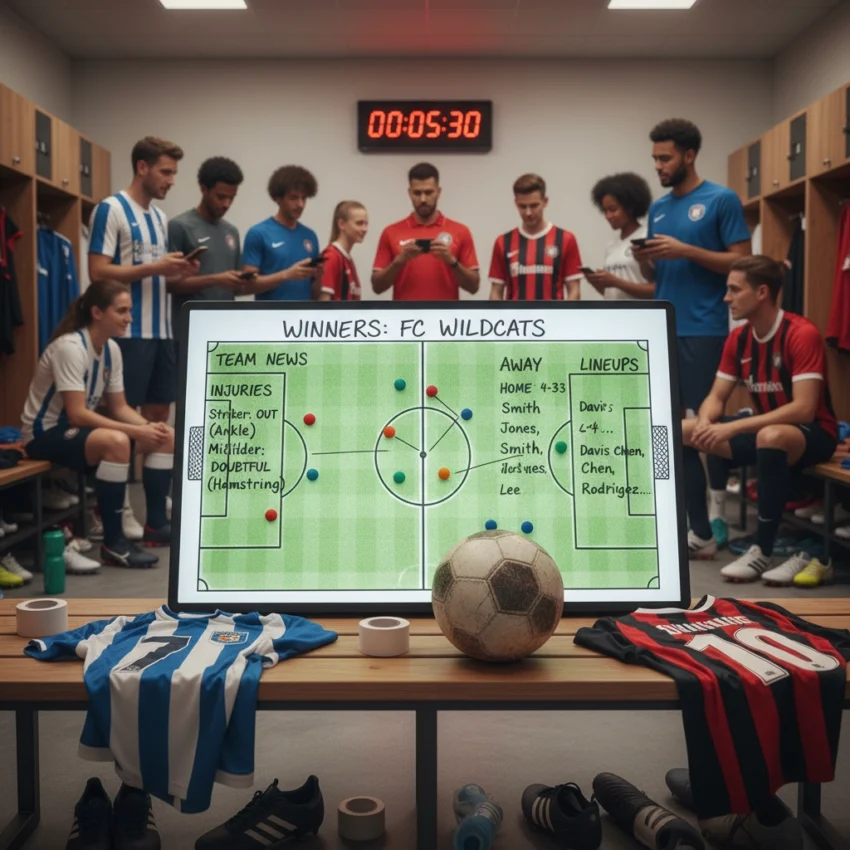
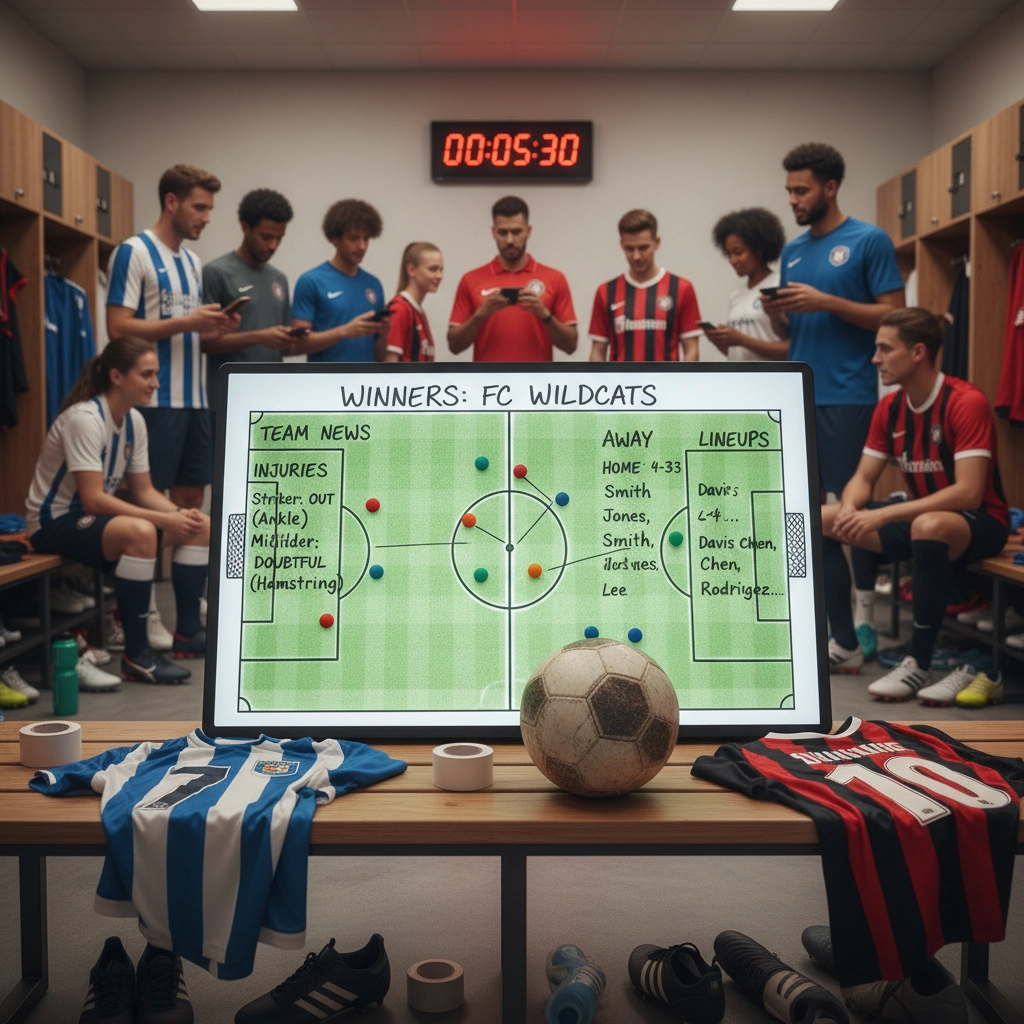
Why team news and injury updates matter when predicting the winner
You already know that form and historical stats matter, but team news and injury reports often provide the decisive edge when forecasting a match winner. When a key player is ruled out or a manager names a rotated side, the expected dynamics on the pitch change dramatically. Learning to read these signals helps you weigh probabilities, adjust stake sizes, and avoid surprises that can turn a confident bet into a losing one.
Think of team news as real-time context that complements pre-match models. Odds are set using broad data, but they can lag behind late injuries, suspensions, or tactical switches. By following official lineups, press conferences, and reliable reporters, you can spot value opportunities—favourable odds created by markets that haven’t fully absorbed last-minute information.
How different types of injuries and absences affect match outcomes
Not all absences carry the same weight. You should evaluate injuries along three dimensions: position, role, and timing.
- Position: Losing a goalkeeper or central defender typically affects defensive stability more than losing a wide midfielder. A late goalkeeper change can influence expected goals against, while a missing winger might reduce crossing and chance creation.
- Role: Distinguish between a like-for-like replacement and the loss of a unique creator or leader. If your team loses their primary playmaker or penalty taker, the team’s expected chance conversion and set-piece threat fall noticeably.
- Timing and match context: An injury suffered in training days before the match allows for tactical readjustment; an injury revealed in the warm-up is more disruptive. Also consider fixture congestion and travel—an otherwise minor problem can be significant in back-to-back matches.
Pay attention to the wording in updates. “Doubtful” with no confirmation of a start is different from “ruled out” or “fit to play.” You should maintain a small checklist: verify through multiple sources, note the expected replacement, and recalculate team strength in your head relative to the opposition.
Reading starting lineups to gauge tactical shifts and betting implications
Starting XI announcements are a goldmine for bettors because they reveal both personnel and formation. When you see a back three replaced by a back four, or a lone striker shifted to two up front, you can infer strategic intent—defensive solidity or attacking emphasis. Use these clues to adjust which markets you target: match winner, both teams to score, total goals, or player-specific bets like shots on target and assists.
- Compare announced lineups to recent selections to detect rotation patterns.
- Identify whether substitutes are impact players or bench depth; frequent late substitutions may indicate fitness concerns or tactical conservatism.
- Consider how the opponent’s available personnel interact—one team’s strength can be cancelled out by the other’s specialist.
Armed with this approach, you’ll start to see where bookmakers may have mispriced outcomes shortly after lineups are released. Next, you’ll get a practical checklist and examples showing how to convert these observations into concrete betting decisions.
Practical pre-match checklist: what to verify and how to quantify impact
Before placing a bet, run through a short, repeatable checklist that converts raw team news into actionable adjustments. Make it habit — you’ll be faster and less prone to emotional errors.
– Confirm sources: cross-check the club’s official channels, the manager’s pre-match press conference, and one or two trusted journalists. Treat social-media rumours as tentative until verified.
– Note the timing: was the issue revealed days out, in training, or in the warm‑up? The later it appears, the greater the disruption and the larger the market inefficiency you may exploit.
– Identify the replacement and profile the change: is it a like‑for‑like swap, a youth promoted, or a tactical reshuffle? Profile elements to note: defensive vs attacking tendency, set‑piece ability, aerial threat, creativity.
– Flag special roles: captaincy, penalty taker, free‑kick duties, goalkeeper — losses here have outsized effects on expected outcomes.
– Translate to market impact: decide which markets are most affected (match winner, over/under goals, BTTS, player props) and quantify your confidence change (for example, reduce your implied probability for the favourite by X%).
– Record stake adjustment rules: set simple rules such as “if key striker out <48 hours, reduce usual stake on favourite by 50%” or “if central defender ruled out in warm‑up, consider small stake on BTTS/over markets.”
This checklist helps you move quickly from information to a numerical decision, rather than guessing based on gut feel.
Concrete examples: converting lineup and injury intel into bets
Seeing the principle in practice will make it easier to apply. Below are typical scenarios and sensible betting responses.
– Late loss of a prolific striker: If the favourite’s top scorer is ruled out on matchday and the replacement is inexperienced, reduce exposure to a straight win bet. Instead look at smaller stakes on draw or on the favourite with a reduced stake, and consider backing under 2.5 goals if the team’s chance creation falls sharply.
– Sudden absence of a first‑choice centre‑back: Defensive instability often raises the probability of goals. This is a good setup for BTTS and over 2.5 goals markets, especially if the opponent has a clinical striker. Consider increasing stake modestly if odds had yet to adjust.
– Manager rotates heavily for a cup game: When multiple starters are rested, the game typically sees fewer goals and more unpredictability. Markets to target include double chance (to cover rotation uncertainty), specific player props for named starters, or small stakes on the underdog, since favorites are effectively weakened.
– Warm‑up cancellation or goalkeeper switch: A late goalkeeper change is high impact. If bookmakers are slow to react, this can create value in match winner or goals-against markets. If you already placed a bet earlier, consider partial hedge or cash‑out if available to limit downside.
Use these templates as starting points, then adapt based on contextual factors like home advantage, fixture congestion, and weather.
Stake management and exploiting late adjustments
Information asymmetry is where disciplined staking wins long term. When team news increases uncertainty, reduce stakes; when news creates clear value, increase them—but within rules.
– Apply proportional sizing: tie bet size to your confidence delta. Example: if a confirmed injury reduces your win probability estimate by 30%, reduce your stake by roughly the same proportion.
– Use in‑play markets to capitalize on tactical signals: a defensive lineup early on suggests lower-priced over/under markets may drift and present value later in the half. Conversely, an early offensive change can create in‑play value on both teams to score or first‑goal props.
– Hedge rather than panic: if a sudden change makes your pre-match bet untenable, look for partial hedges instead of full cash‑outs to salvage value while preserving upside.
– Keep a short log: record how lineup-based adjustments affected outcomes to refine your stake rules over time.
Disciplined, rules-based reactions to team news turn noise into an edge — and prevent late surprises from eroding bankrolls.
Applying these principles consistently will make team news an asset rather than a distraction. Practice the checklist, keep your stake rules simple, and review outcomes so your responses to injuries and late lineups become instinctive and measurable.
Putting the approach into everyday use
Treat every match as an experiment in information processing. Focus on reliable sources, quantify how a piece of news changes the probabilities you assign, and respond with pre‑set stake rules rather than emotion. Over time the small, disciplined adjustments outlined here compound into clearer edges — and you’ll be better placed to spot market overreactions or slow bookmaker responses. When in doubt, verify lineups on official club channels and reputable outlets like BBC Sport before committing stakes.
Frequently Asked Questions
How fast should I act when late team news breaks?
Verify first — cross‑check the club, manager quotes, and one trusted journalist. If confirmed within 48 hours adjust stakes per your rules; if it’s a same‑day or warm‑up revelation, expect larger market disruption and consider smaller, faster bets or in‑play opportunities rather than reversing a settled position impulsively.
Which betting markets are most sensitive to lineup and injury updates?
Match winner, over/under goals and both‑teams‑to‑score are commonly affected. Player props (goals, assists, clean sheets) and set‑piece markets shift when specialists are absent. Target the markets where the removed player had the greatest influence — for example, loss of a top scorer impacts goal markets; loss of a captain or goalkeeper can swing match winner odds sharply.
What practical stake rule should I use when a key player is ruled out?
Use proportional sizing: reduce your pre‑match stake in line with the estimated drop in win probability (e.g., reduce by ~30–50% for a top striker missing). For last‑minute defensive losses, consider increasing exposure to BTTS/over markets instead of cancelling bets. Always log the decision and outcome to refine your percentages over time.
Common pitfalls to avoid when acting on team news
Even experienced bettors can fall into traps when responding to lineup information. Avoid these common errors by following simple safeguards.
- Reacting to rumours as facts: Social media can amplify unverified reports. Always treat initial posts as leads to verify rather than triggers for large stakes.
- Over-adjusting based on a single data point: A missing player matters, but context (fixture importance, opponent strength, home/away) determines its real impact. Don’t let one absence override a broader model without quantifying the shift.
- Forgetting correlation across markets: If you change exposure to match-winner markets, remember complementary markets (player props, HT/FT, corners) may require simultaneous adjustment to avoid unintended overlap or double exposure.
- Ignoring replacement profiles: Jumping to conclusions about a team’s creative output without checking the replacement’s tendencies (e.g., past minutes, position flexibility) leads to mispricing the true effect.
Tools and sources to monitor team news efficiently
Build a compact toolkit that delivers trustworthy, fast updates so you can act without constant manual searching.
- Official club channels (website, app, verified social accounts) for confirmed lineups and injury statements.
- League and competition accounts for referee appointments, official match reports, and disciplinary news.
- Reputable journalists and beat reporters — find two or three who consistently post accurate early information and follow them for rapid alerts.
- Specialist data providers (e.g., expected goals services, injury databases) to quantify how a missing player historically affects team output.
- Automation tools: set up push alerts, RSS feeds, or Telegram channels that aggregate verified team news so you receive concise, time-stamped records.
Short case study: Using late news to find value
Imagine you backed Team A pre-match at 1.70, relying on their strong attacking record. On matchday morning a reliable reporter confirms the team’s top striker is injured in training and ruled out. Bookmakers drift the price to 1.95 an hour before kick-off, but one exchange still lists 1.85. By cross‑checking the replacement’s historical minutes and noting Team A’s reliance on the striker for set pieces, you estimate the win probability should fall by roughly 20%. The drift to 1.95 is appropriate, but the 1.85 price on the exchange is mispriced. A small, timed lay or a modest hedge at 1.85 locks in a reduced risk profile while preserving upside if the market corrects. Recording the decision and outcome helps calibrate future proportional sizing rules.
How to log and learn from each decision
Keeping a simple, consistent log is one of the fastest ways to turn ad‑hoc reactions into a repeatable edge. Your spreadsheet or notes should include:
- Date, match, and market you bet.
- Source and timing of the team news (official, journalist, warm-up).
- Estimated impact on probability (percentage change) and the stake adjustment you made.
- Final result and profit/loss, plus a brief reflection on whether the market move fully priced the news.
After 50–100 logged decisions you’ll see patterns: which types of absences you judged well, where you over/under-reacted, and which reporters are most reliable. Use that feedback to refine your stake rules and confidence deltas.
Final thoughts: integrating team news into a long-term edge
Team news and injury updates are not a magic bullet — they’re a stream of information that, when processed systematically, gives you measurable advantages over time. Prioritise verification, quantify the effect, act within pre-set stake rules, and track outcomes. Gradually you’ll turn faster responses and cleaner judgment into a sustainable improvement in returns. In short: verify quickly, quantify prudently, and bet according to rules rather than reaction.