
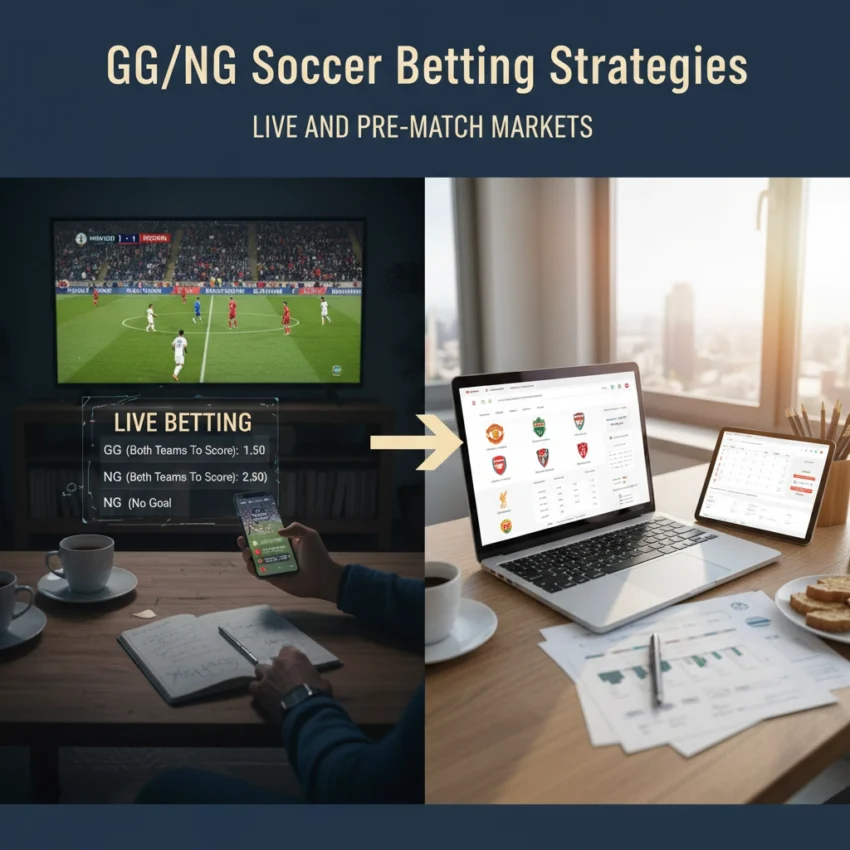
Why GG/NG bets are attractive and where they fit in your betting toolkit
GG (both teams to score) and NG (no goal) markets are simple to understand but require nuance to use profitably. You can leverage GG/NG bets for quick, frequent opportunities because they don’t depend on the match winner — only on whether both sides find the net. That simplicity makes them ideal for mixing into single bets, accas, or live hedges. Before you stake money, you need a framework for assessing value and timing your bets; this part covers the foundational concepts you’ll use pre-match and in-play.
Core concepts you should master first
- Probability vs. odds: Convert bookmaker odds into implied probability and compare that to your assessment of the chance both teams score.
- Value betting: Only place GG/NG bets when your estimated probability exceeds the implied probability from market odds.
- Variance and sample size: Short-term outcomes swing a lot; treat GG/NG as a high-variance market and size stakes accordingly.
- Time-specific edge: Odds shift dramatically pre-match and in-play; knowing when you have the edge is as important as picking the right game.
Pre-match assessment: filters and metrics that predict both teams scoring
When you’re reviewing the fixture list, use filters to quickly rule out low-probability matches. A consistent pre-match process speeds decision-making and reduces emotional bets. Focus on the following measurable factors so you can compare matches objectively.
Essential pre-match filters and how to apply them
- Recent scoring form: Check the last 6–10 matches for both teams. If both sides average 1+ goals per game and frequently concede, GG becomes more likely.
- Head-to-head trends: Some pairings historically produce goals regardless of current form. If 4+ of the last 6 meetings were BTTS, that’s a signal to investigate further.
- Injury and lineup risk: Missing key forwards or a defensive anchor changes probabilities substantially. You should reassess odds if either team is without a primary striker or central defender.
- Motivation and competition context: Cup fixtures, relegation battles, or teams needing a win for promotion tend to open up play; conservative contests (dead rubbers) often trend towards NG.
- Expected goals (xG) and defensive xG against: Metrics like xG give insight beyond raw goals — a team with high xG but low actual goals might be underperforming and could correct toward more goals.
Applying these filters will let you shortlist matches where GG or NG offers genuine value. With your shortlist ready, the next step is learning how live-match events and in-play odds movements create concrete betting opportunities and when to act on them.
In-play signals that reliably shift GG/NG probabilities
Live betting is where GG/NG markets come alive — and where structural edges appear if you know which indicators matter. Focus on a handful of objective, observable signals rather than gut feelings. They will help you spot when the market is mispricing the chance both teams score.
- xG flow and chance quality: Track cumulative in-play xG or shot quality for each side. Two teams generating sustained chances (e.g., combined in-play xG > 0.4 in the first 30 minutes) without a goal often creates value on GG when odds drift because the probability of regression to the mean is high.
- Shots on target and big chances: Frequency of SOT and clear-cut chances is more predictive than raw possession. If both teams are finishing chances on target, GG probability rises even if score remains 0-0.
- Corners and set-piece pressure: A steady stream of corners against each defence indicates sustained pressure and increased goal expectancy. Markets often underweight corner-driven threats, giving you an edge.
- Tactical changes and substitutions: Early defensive substitutions or a coach switching to a low block usually lowers GG probabilities; attacking subs or a formation shift toward two strikers increases them.
- Disciplinary events and injuries: Red cards generally reduce total goals but can increase the chance of a goal for the stronger attacking side — context matters. A red on a defensive midfielder can open a match up; a red to a forward tends to lower GG chances.
- Environmental and match context shifts: Rain, a deteriorating pitch, or late-game fatigue in high-tempo matches can prompt sudden NG or GG swings depending on which team is impacted.
Use live data overlays or a single trustworthy feed for these metrics. Watching every fixture visually helps, but a good live xG/shot feed will often flag opportunities faster than odds movements.
How to execute live trades: timing, markets and hedging
Execution is as important as the signal. Choose entry and exit approaches that match your tolerance for turnover and your access to liquidity (bookmakers vs. exchanges).
- Back pre-match GG, hedge in-play: If you back GG pre-match and a team scores early, look to lay GG on an exchange or take a cash-out if available to lock profit. Example: back GG at 1.90 for $100; after a 20′ goal odds to lay the same position fall to 1.30 — laying reduces risk and secures upside.
- Wait for value on drifting odds: If both sides create chances but market drifts (common at 0-0 half-hour mark), a mid-game back on GG can be high EV. Conversely, if a dominant side takes the lead and parks the bus, NG (or lay GG) can become attractive.
- Use correlated markets: Next-goal, over/under and corners can be efficient ways to express a view. If you think GG will occur but not when, backing Next Goal for the underdog at decent odds can be profitable when in-game momentum shifts toward them.
- Manage liquidity and execution risk: Exchanges allow precise lays; bookies may delay lines or restrict stakes. Scale into trades and use limit orders where possible to avoid adverse fills.
Staking, portfolio rules and common live-betting mistakes to avoid
Because GG/NG is high variance, strict rules will keep your bankroll intact and your edge exploitable over time.
- Conservative stake sizing: Prefer flat or fractional-Kelly approaches. Live bets should generally be smaller than your pre-match maximum because information is noisier and price moves faster.
- Pre-set limits and stop-losses: Cap exposure per match (e.g., no more than 2–3% of bankroll) and per day. Stop chasing when variance runs cold; taking a break after a losing streak prevents tilt-driven errors.
- Track every trade and review patterns: Log signals, odds at entry/exit, and the cues you acted on. After a run of losing live bets, audit whether you misread a particular indicator (red cards, set-piece pressure, etc.).
- Avoid common traps: Don’t overreact to a single event (an early chance or a questionable penalty call), avoid heavy staking on favorites without value, and be cautious with late-game desperation bets where bookies ease on limits.
Combined, disciplined execution and a rules-based live process let you convert sporadic in-play edges into a sustainable strategy for GG/NG markets.
Practical checklist before placing GG/NG live bets
- Confirm your data feed (live xG, SOT, corners) is updating reliably before you stake.
- Set a maximum per-match exposure (e.g., 2–3% of bankroll) and a session loss limit.
- Identify the specific in-play signal you’ll act on (e.g., sustained combined xG > 0.4 with no goal).
- Decide entry and exit rules ahead of time: target odds, stop-loss, and hedging criteria.
- Prefer limit orders or small scaled entries if liquidity or price movement is a concern.
Putting the process to work
Turn rules and signals into routine: test ideas in small stakes, keep a tight journal of your actions and outcomes, and iterate based on objective results rather than short-term variance. Maintain discipline around staking and stop-losses, and prioritize consistent edge identification over chasing short-term wins. For deeper data sources and contextual research you can rely on resources such as Understat to study xG patterns and team tendencies before deploying live strategies.
Frequently Asked Questions
When is it better to back GG pre-match rather than waiting for in-play value?
Backing GG pre-match is preferable when pre-game indicators (lineups, head-to-head trends, both teams’ attacking/defensive metrics) show clear value relative to available odds. If you expect early goals or teams with high chance-creation rates are priced short, locking value pre-match avoids missed opportunities from heavy in-play market competition. If you prefer reacting to live signals, size stakes smaller pre-match and use in-play hedges as described.
How do red cards typically affect GG/NG probabilities?
Red cards change GG/NG dynamics depending on context: a red to a defensive player (especially a holding midfielder) can increase the chance of both teams scoring by opening space, whereas a red to an attacking player tends to lower GG probability as the attacking side loses firepower. Consider match state, time remaining, and which player/role was sent off before adjusting your position.
What staking approach suits high-variance live GG/NG betting?
Use conservative sizing: flat stakes or a fractional-Kelly method adapted for higher variance and quicker price movements. Live bets should often be smaller than your largest pre-match stakes. Cap per-match exposure and use unit sizes that preserve bankroll through inevitable variance while allowing you to exploit repeated edges.