
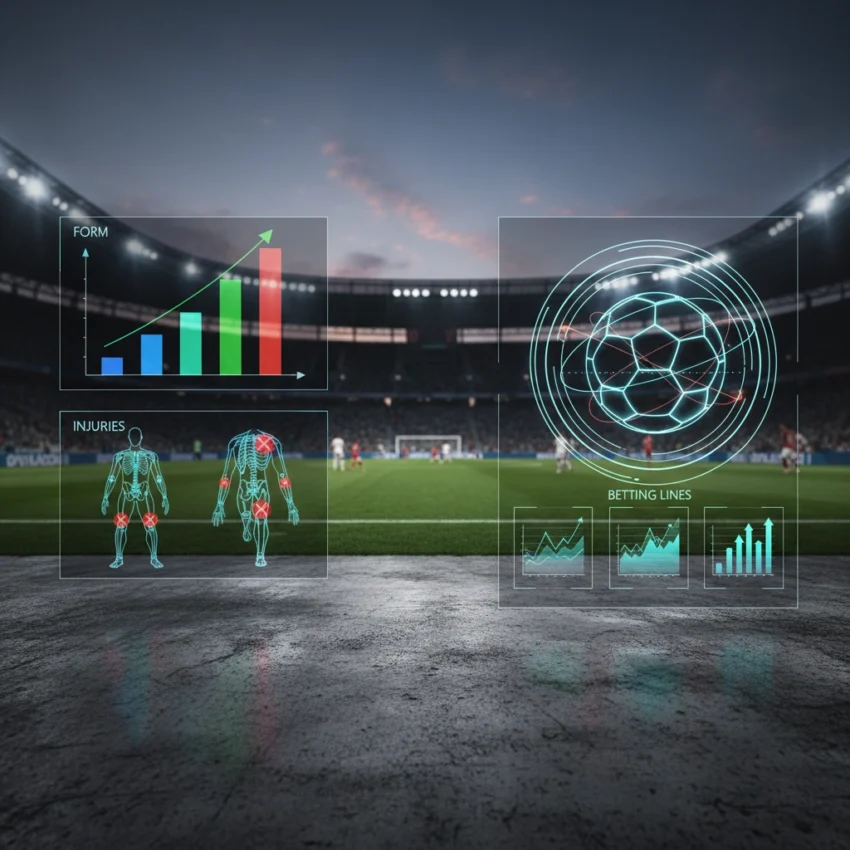

Reading the Bigger Picture Before Kickoff
When you prepare a match preview, you’re assembling a narrative that explains not just who might win, but why. A clear pre-match snapshot combines recent form, personnel availability, and external factors such as schedule congestion or travel. If you focus on these elements systematically, you’ll create previews that guide readers through the reasoning behind predictions rather than offering guesses.
Start by asking: what story do the last several fixtures tell? Are results masking underlying performance metrics (for example, narrow wins despite poor chance creation), or does the scoreboard match what the eye and analytics suggest? You’ll balance raw outcomes with deeper indicators so your preview captures reliability, momentum, and fragility.
Interpreting Recent Form and Key Performance Indicators
“Form” is more than the last three results. You’re looking at trends across multiple dimensions that influence future performance. Use both qualitative observations and quantitative metrics to form a robust view.
- Results and trend length: Evaluate the last 5–10 matches to spot sustained improvement or decline rather than short-term variance.
- Home vs away split: Many teams perform very differently on the road; compare points per game in each setting.
- Expected goals (xG) and xGA: xG shows whether a team is creating high-quality chances or relying on finishing variance.
- Possession and pressing metrics: If your team relies on high press, check opponent tendencies that could neutralize that approach.
- Fixture context: Identify recent tough opponents or cup commitments that might have inflated or depressed results.
When you explain form in your preview, translate metrics into narrative: e.g., “Although Team A has won three in a row, their xG suggests they’ve been fortunate; Team B’s defense has been steadily conceding fewer chances, so expect a tighter game.” This helps readers see the link between data and likely match dynamics.
Assessing Injuries, Suspensions, and Probable Lineups
Player availability changes tactical options and match balance. You should treat injury and suspension news as pivotal—especially for key creators, central defenders, or goalkeepers whose absence forces tactical change.
- Check official club reports, training updates, and trusted beat reporters for early signals.
- Identify which positions lack depth: losing a starting striker is different from losing a rotational wingback.
- Consider timing and match importance: late fitness doubts often suggest risk-averse selection.
- Factor in disciplinary suspensions that remove leaders or specialized role players.
Explain how each absence or return affects team shape and matchups—for example, replacing a creative midfielder with a deeper, defensive option may reduce goal-scoring chances and tilt expectations toward fewer goals.
With form and personnel covered, you’ll be ready to examine how bookmakers translate these signals into odds and what market movement reveals about public and sharp money—leading into an analysis of betting lines and how to use them in your previews.

Decoding Betting Lines and Market Movement
Bookmakers turn all the form, injury and contextual information you’ve gathered into a single number: the price. Your job as a preview writer is to translate that number back into a narrative readers can understand, and to spot where the market might be mispricing risk.
Start with the basics: convert odds into implied probabilities (and factor out the bookmaker’s margin). This tells you what the market collectively believes the chances are, and it gives you a benchmark to compare against your own view. Then watch movement: the timing and direction of line changes convey information beyond the final price.
Key patterns to watch for:
– Early movement: can reflect heavy pre-match bets from informed punters or syndicates, often based on insider lineup/injury news.
– Late movement: usually driven by public money or last-minute news (fitness reports, weather).
– Consensus movement across books vs isolated shifts: when multiple books move in the same direction it’s more likely a sharp influence; a single book moving could be a limit adjustment or an error.
– Reverse line movement: when public bets an outcome but the line moves against those bets, suggesting sharp money is on the other side.
Also consider related markets. Goals totals, handicaps and player props often move in tandem; a sudden drop in a favorite’s moneyline paired with a falling goals total hints at an expectation of a defensive reshuffle or poor attacking availability.
Turning Odds into Actionable Predictions
Once you understand what the market is signalling, convert that into clear, defensible assertions in your preview. Don’t just quote the favorite — explain the delta between market-implied probability and your model or informed judgement, and frame any recommended angles around that gap.
Practical steps:
– Compute implied probability for each outcome and compare it with your model’s probability. If your model is materially higher than the market (after accounting for margin and uncertainty), you’ve identified value.
– Be explicit about assumptions: “This projection assumes Player X starts; if late reports confirm a benching, the model flips.” That tells readers what news would change your stance.
– Choose the market that best reflects your edge. If you’re confident about an underdog’s chance but not the margin, a moneyline bet or draw-no-bet is cleaner than a spread. If you expect a low-scoring tactical match, look to totals or goalkeeper/defensive props.
When suggesting stakes, tie them to confidence. You don’t need to prescribe exact bankroll percentages in a preview, but offering ranges (low/medium/high confidence) helps readers calibrate risk. Always flag uncertainty where small pieces of news can overturn your view.

Market Signals: Reading the Source of Pressure
Not all money is equal. Identify whether movement is coming from sharps (professional bettors), the public, or automated models:
– Sharp-driven moves tend to be early, consistent across multiple books, and may prompt limits.
– Public money often inflates favorites and totals and can produce reverse line movement when books react to liability.
– Exchange liquidity reveals genuine price discovery: heavy matched volume on exchanges is a strong indicator of informed interest.
Use these signals in your preview narrative: if sharps are backing an underdog, explain what they likely see (e.g., formation mismatch, key returning player). That contextualizes the line and gives readers the mindset to interpret both the odds and your prediction.
Final Notes for Match-Previewers
Write with curiosity and discipline: your previews should show the logic that connects raw information to an expectation, and remain open to correction as new data arrives. Be explicit about the assumptions that drive your view (likely lineups, match importance, weather) and signal clearly what news would make you change it. That transparency builds trust and helps readers act on the preview rather than merely read it.
- Keep models and narratives in conversation — numbers without context mislead, and stories without numbers invite bias.
- Monitor market movement and volume: early, cross-book shifts often carry different meaning than late, single-book adjustments.
- Use reputable data sources for metrics and line history; for player stats and advanced metrics, resources like FBref can be helpful starting points.
Finally, treat each preview as both a forecast and a log. Track outcomes against your stated assumptions and the market’s signals — that feedback loop is where skill develops. With clear reasoning, consistent methods, and humility about uncertainty, your previews will be more useful, credible, and actionable for readers.
Frequently Asked Questions
How many recent matches should I consider when assessing a team’s form?
Look broadly — typically the last 5–10 matches — but weigh them by context. Give more significance to recent fixtures against comparable opposition, and account for changes like new managers or key injuries that can reset form faster than raw results indicate.
What does late betting-line movement usually mean?
Late movement is often driven by last-minute information (fitness, starting XI) or by public sentiment. If multiple books move in the same direction late, it could reflect sharp information; isolated late shifts are more likely public-driven or book-specific liability adjustments.
When should a preview include a betting recommendation rather than just analysis?
Include a recommendation only when you can identify a clear edge between your assessed probability and the market-implied probability, and state the assumptions and confidence level. If uncertainty is high or small news could flip the view, stick to analysis rather than a firm bet.